THE GUT–BRAIN CONNECTION
How the gut and brain communicate.
The gut and brain communicate in both directions through nerves, hormones, immune signals and the gut microbiome. The vagus nerve is one route within this wider network.
These signals help coordinate digestion and internal sensations. Digestive symptoms are real and can have many causes; stress alone does not identify the cause.
COMMON PATTERNS
Digestive patterns you may recognise.
Abdominal pain and bloating
Pain, cramping, pressure and bloating may relate to sensitivity, movement through the digestive tract, distension or several other processes.
Constipation and diarrhea
Changes in how quickly or slowly contents move through the bowel can contribute to constipation, diarrhea or a pattern that alternates between them.
Early fullness and upper-abdominal discomfort
Some people experience discomfort, burning, nausea, bloating or a feeling of becoming full unusually early during a meal.
Symptoms that fluctuate
Digestive symptoms may change over time and may be influenced by meals, illness, medicines, sleep and stress. Variation alone does not determine the underlying condition.
These patterns overlap with many digestive disorders. This page does not diagnose IBS, functional dyspepsia or another gastrointestinal condition.
Why study stimulation at the ear?
Transcutaneous auricular vagus nerve stimulation (taVNS) targets the auricular branch at the outer ear. Researchers are exploring its effects in specific digestive conditions, including IBS with constipation and functional dyspepsia.
taVNS RESEARCH
What research has found.
Explore findings from a randomized trial in IBS with constipation and a systematic review in functional dyspepsia.
RANDOMIZED SHAM-CONTROLLED TRIAL · 2021
taVNS and IBS with constipation
A randomized, sham-controlled study involving 42 people with constipation-predominant IBS found more complete spontaneous bowel movements and lower abdominal-pain scores with active taVNS than with sham stimulation after four weeks.
This was a small, four-week study in one IBS subtype. Its findings do not establish long-term benefit or benefit for other IBS subtypes or unrelated digestive conditions.
Shi et al. · JCI Insight · 2021
Read the published studySYSTEMATIC REVIEW & META-ANALYSIS · 2025
taVNS and functional dyspepsia
A 2025 systematic review and meta-analysis of six randomized trials involving 716 participants reported improvements in functional dyspepsia symptoms and quality of life with taVNS compared with sham stimulation.
Stimulation protocols varied across the included trials. The authors called for additional high-quality studies to establish optimal treatment protocols. The findings concern functional dyspepsia, not digestion generally.
Lee et al. · Complementary Therapies in Medicine · 2025
Read the published reviewThese studies used their own taVNS devices and protocols and did not evaluate Neuvago.
Explore wider gut–brain researchNEUVAGO
A calmer pause in your routine.
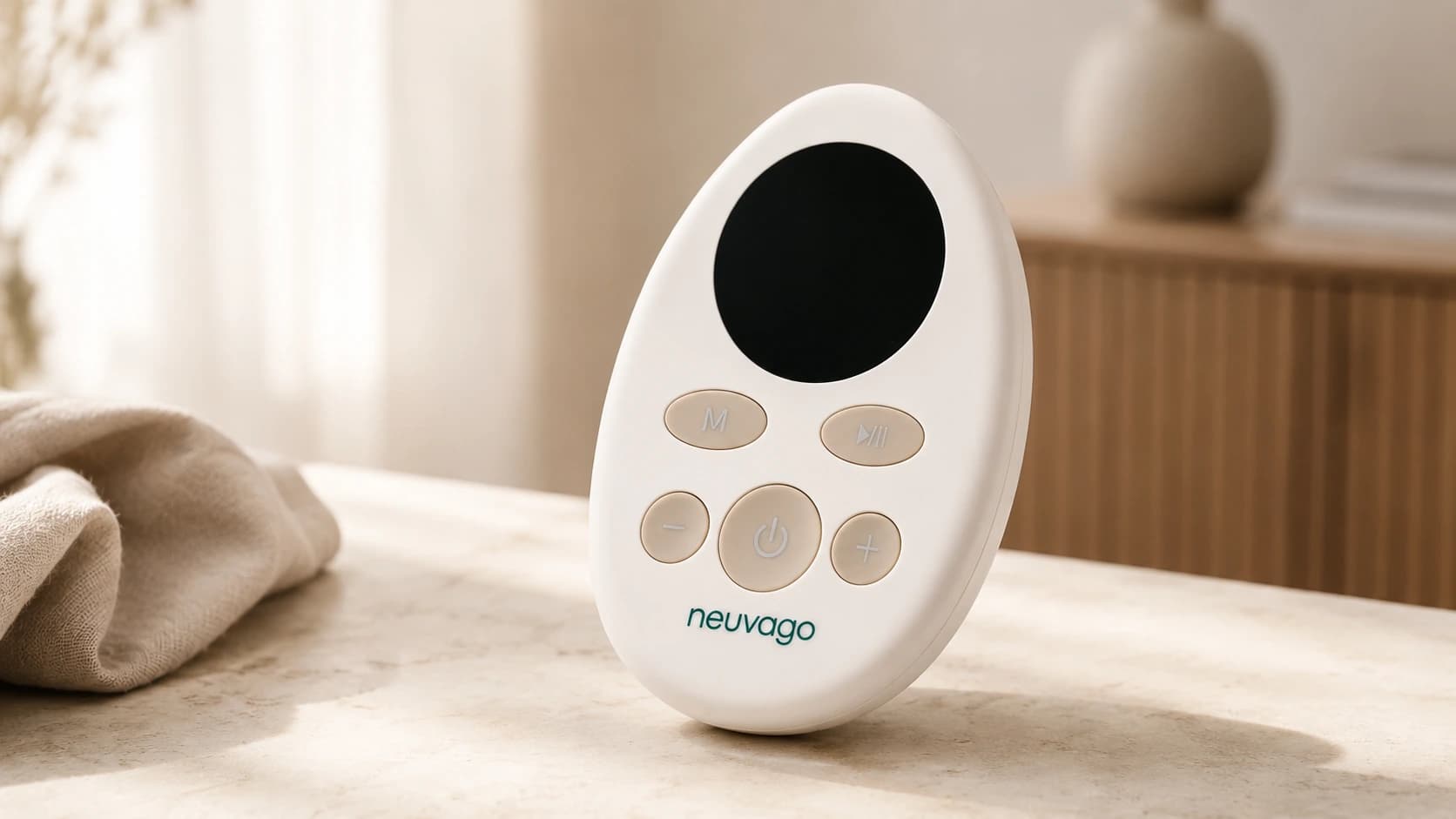
Neuvago delivers gentle stimulation through an earpiece at the outer ear, designed to support relaxation and everyday wellbeing. A 20-minute pause can make room for calm alongside everyday routines, without promising treatment for digestive symptoms.
Explore NeuvagoMEDICAL ASSESSMENT
When digestive symptoms need medical assessment.
Some digestive symptoms need prompt or emergency medical evaluation.
Seek emergency medical care for vomiting blood, black or tarry stools, significant bleeding, fainting or severe and constant abdominal pain.
Prompt assessment is important for difficulty or pain when swallowing, frequent vomiting, persistent abdominal swelling, fever or yellowing of the skin or eyes.
Unexplained weight loss, loss of appetite, anemia or blood in the stool also require medical assessment.
Talk with a healthcare professional about new, persistent, progressively worsening or clearly changed digestive symptoms, especially when they do not improve.
Digestive symptoms have many possible causes, and this list is not exhaustive. Seek appropriate medical advice when you are uncertain about a symptom or a change in your usual pattern.
RELATED READING
Continue with relevant education and research.
Explore foundational nervous-system articles, related research topics and condition-focused context without treating those resources as a diagnosis or product claim.
Learn
Research
Related conditions
SOURCES AND REVIEW
Evidence, context and review status.
This article uses authoritative digestive-health information, foundational gut–brain research and condition-specific taVNS studies. Findings remain limited to the populations, interventions and outcomes studied.
NIDDK — Irritable Bowel Syndrome
External source ↗
National Institute of Diabetes and Digestive and Kidney Diseases. Definition & Facts for Irritable Bowel Syndrome.
Used for IBS definitions, bowel-pattern context and disorders of gut–brain interaction.
NIDDK — Indigestion and Functional Dyspepsia
External source ↗
National Institute of Diabetes and Digestive and Kidney Diseases. Definition, symptoms and causes of indigestion and functional dyspepsia.
Used for dyspepsia symptom definitions, alternative causes and medical-assessment guidance.
Mayer, 2011
External source ↗
Mayer EA. Gut feelings: the emerging biology of gut-brain communication. Nature Reviews Neuroscience. 2011;12(8):453–466.
Used for the complex, bidirectional neural, immune and endocrine framework of gut–brain communication.
Shi et al., 2021
External source ↗
Shi X, Hu Y, Zhang B, et al. Ameliorating effects and mechanisms of transcutaneous auricular vagal nerve stimulation on abdominal pain and constipation. JCI Insight. 2021;6(14):e150052.
Used only for the defined four-week randomized sham-controlled study in 42 participants with IBS-C.
Lee et al., 2025
External source ↗
Lee B, Kwon CY, Jeong YK, et al. Transcutaneous auricular vagus nerve stimulation for functional dyspepsia: a systematic review and meta-analysis. Complementary Therapies in Medicine. 2025;94:103243.
Used only for the six-trial, 716-participant functional-dyspepsia evidence summary and its protocol limitations.
Kim et al., 2022
External source ↗
Kim AY, Marduy A, de Melo PS, et al. Safety of transcutaneous auricular vagus nerve stimulation (taVNS): a systematic review and meta-analysis. Scientific Reports. 2022;12:22055.
Used for broad taVNS safety context and the limitation that adverse-event reporting was incomplete in many studies.
Evidence reviewed
27 August 2026
Editorial review
Neuvago Editorial Team
IMPORTANT INFORMATION
This article is provided for general educational purposes only and is not medical advice.
It is not intended to diagnose a condition or recommend treatment, and it does not replace assessment, diagnosis or care from a qualified healthcare professional.
Contact a doctor or another qualified healthcare professional if you have questions about symptoms, a diagnosis or treatment.
Seek urgent or emergency help for severe, sudden or rapidly worsening symptoms, or whenever you may be in immediate danger.