VNS
Vagus Nerve Stimulation
The broader research field, including implanted and non-invasive approaches.
RESEARCH
Vagus nerve stimulation has been studied for decades. A growing body of research is examining non-invasive approaches, including transcutaneous auricular vagus nerve stimulation (taVNS).
Explore research across sleep, stress, autonomic function, heart rate variability (HRV), brain pathways, safety and tolerability.
The broader research field, including implanted and non-invasive approaches.
Non-invasive vagus nerve stimulation delivered through the skin.
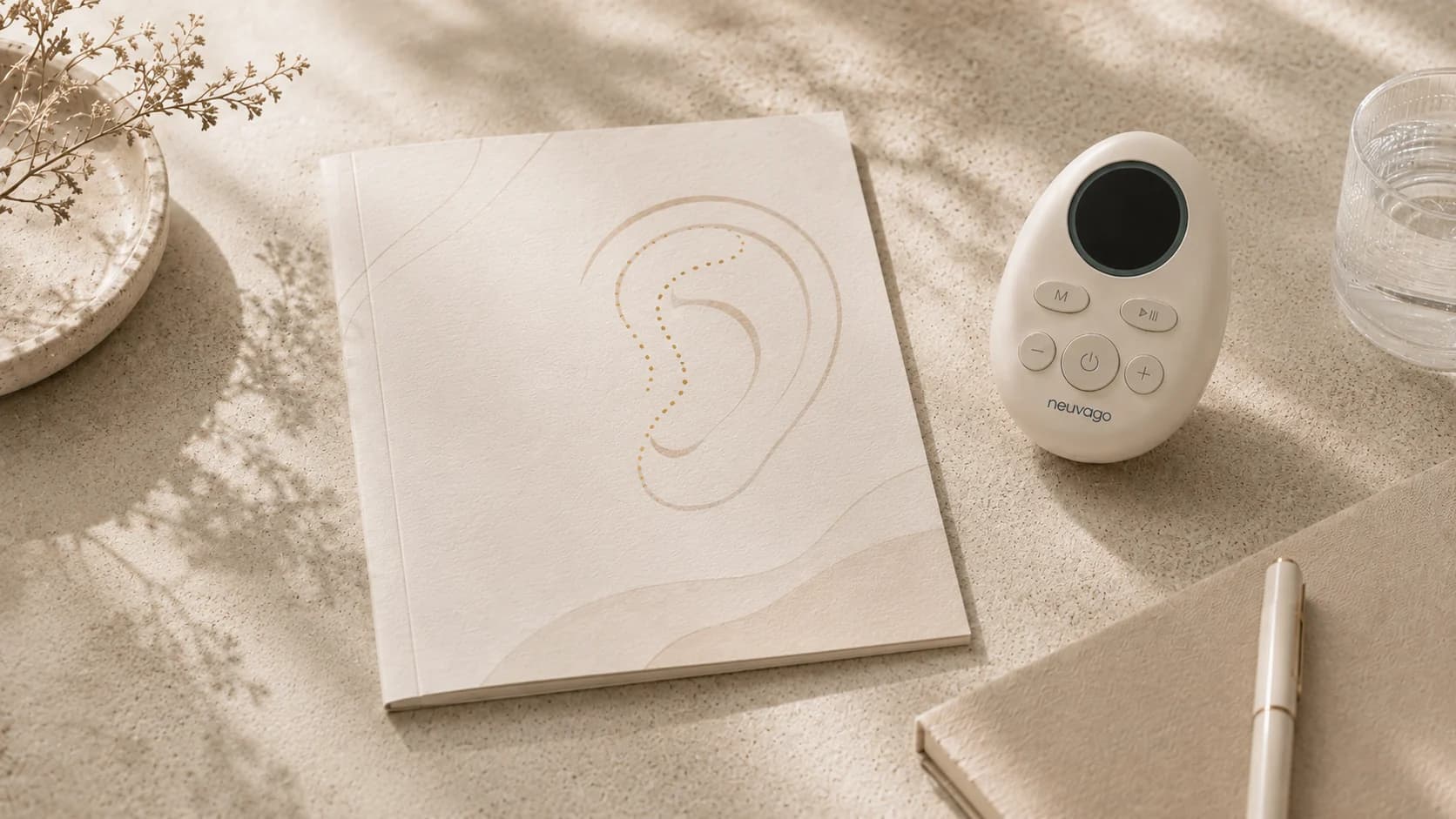
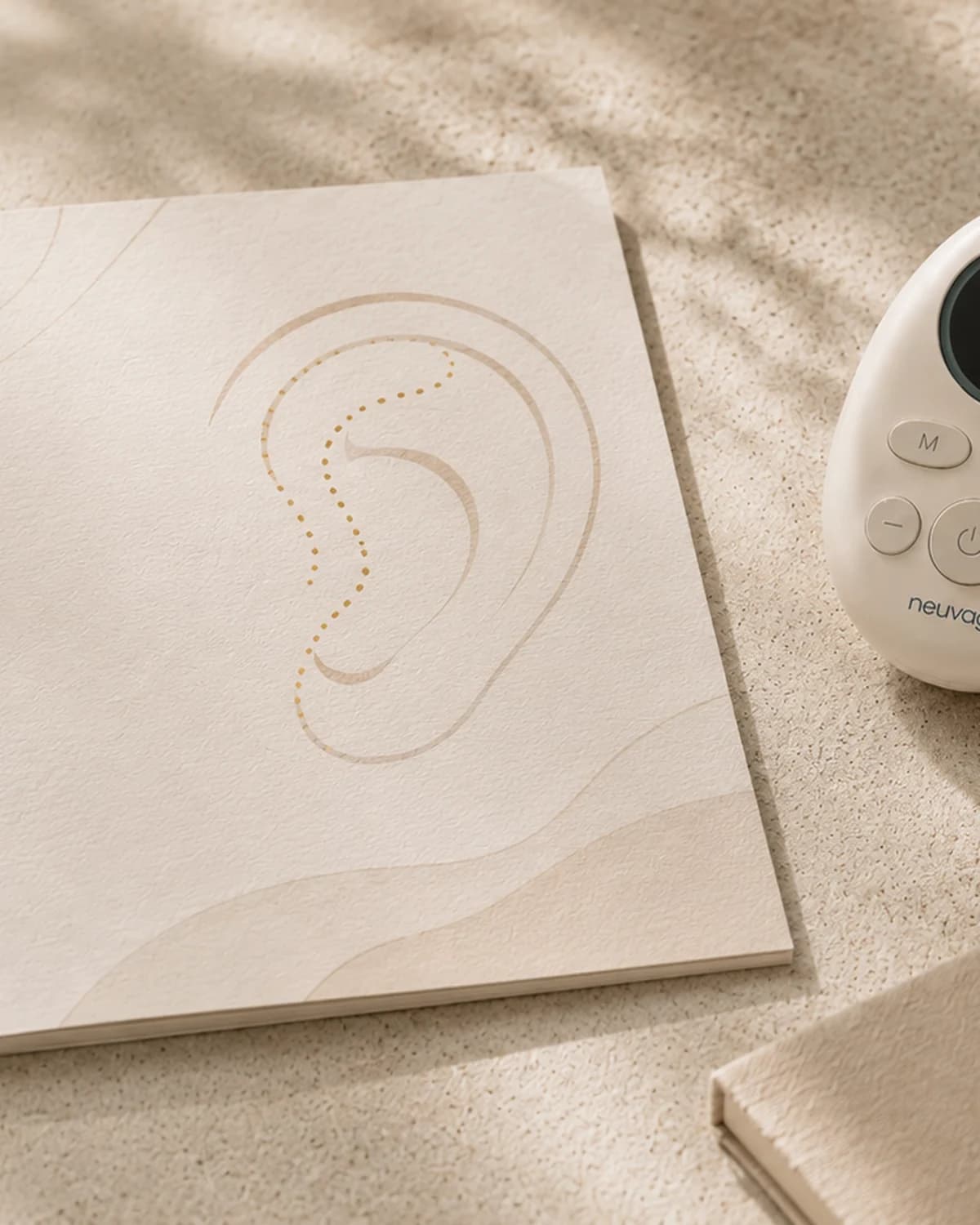
Ear-based stimulation targeting the auricular branch of the vagus nerve.
taVNS RESEARCH
Transcutaneous auricular vagus nerve stimulation (taVNS) applies non-invasive electrical stimulation at the outer ear. Research is examining how auricular stimulation engages vagal pathways, how stimulation protocols influence outcomes, and how taVNS relates to autonomic function, sleep, stress, brain pathways, safety and other areas.
Findings vary between devices, stimulation protocols, study populations and measured outcomes.
RESEARCH AREAS
Browse research on how VNS and taVNS are being studied across sleep, stress, autonomic regulation, heart rate variability, brain pathways, safety, inflammation and gut–brain communication.
Research examining sleep quality, insomnia and sleep-related outcomes.
Research examining stress-related physiological, autonomic and emotional responses.
Research on sympathetic and parasympathetic activity, recovery and the body's shift between physiological states.
Research examining HRV as a marker of autonomic activity, including its uses and limitations.
Human neuroimaging and mechanistic research examining how auricular stimulation engages central vagal pathways.
Systematic research examining reported adverse events, tolerability and safety across human taVNS studies.
Research on neural–immune communication, inflammatory signalling and the cholinergic anti-inflammatory pathway.
Research on neural, hormonal, microbial and immune communication between the digestive system and the brain.
FEATURED taVNS RESEARCH
Selected human research across sleep, safety and brain pathways, including randomized sham-controlled trials, systematic reviews, meta-analyses and human neuroimaging.
A randomized sham-controlled clinical trial of 72 adults reported a 4.2-point greater improvement in PSQI sleep-quality scores with active taVNS than with sham at week 8. Responder rates were 69.4% with active taVNS and 27.8% with sham.
Read study summaryA double-blind randomized sham-controlled trial of 40 participants reported significantly greater improvements in sleep quality and insomnia severity with active taVNS than with sham after six weeks.
Read study summaryA systematic review and meta-analysis of 177 studies involving 6,322 participants found no difference in overall adverse-event risk between active taVNS and control conditions, while noting incomplete adverse-event reporting across much of the literature.
Read study summaryA human fMRI study in 12 healthy adults found that electrical stimulation at the left cymba conchae engaged central pathways associated with the vagus nerve.
Read study summaryThese studies examine the wider taVNS research field and did not evaluate the Neuvago device.
FOUNDATIONAL SCIENCE
Selected papers provide theoretical, methodological and experimental context for the broader science surrounding vagal and autonomic regulation.
Browse all foundational studiesJulian F. Thayer & Richard D. LaneJournal of Affective Disorders
A model connecting brain networks, emotional regulation, autonomic flexibility, heart rate variability and vagal activity.
Read study summaryTask Force of the European Society of Cardiology and NASPECirculation
A foundational methodological reference for heart rate variability measurement, terminology and interpretation.
Read study summaryL. V. Borovikova et al.Nature
A landmark preclinical experiment examining how vagus nerve stimulation influenced systemic inflammatory signalling.
Read study summaryEmeran A. MayerNature Reviews Neuroscience
A major review of neural, hormonal, microbial and immune communication between the gut and brain.
Read study summaryRESEARCH CONTEXT
Study design, stimulation protocol, participant group and measured outcome all shape what a research finding can tell us.
Systematic reviews and meta-analyses combine findings across multiple studies. Randomized trials examine outcomes under controlled conditions, while neuroimaging and mechanistic studies explore how stimulation may engage biological pathways.
Stimulation site, frequency, pulse width, intensity, session duration and control condition can differ substantially between taVNS studies and influence the results.
Findings from one device, protocol, participant group or clinical setting cannot automatically be assumed to apply to every device, user or outcome.
SCIENTIFIC STUDIES LIBRARY
Explore study summaries across VNS, taVNS, sleep, safety, autonomic function, heart rate variability, brain pathways, inflammation and gut–brain communication, or compare reported stimulation methods and parameters in the VNS Protocol Database.
CONTINUE EXPLORING
Explore clear educational articles, or see how Neuvago stimulates the vagus nerve through the outer ear.
Explore clear, science-informed articles on the vagus nerve, nervous system regulation, stress, sleep, recovery and non-invasive vagus nerve stimulation.
Explore LearnSee how Neuvago delivers ear-based stimulation, how sensory signals travel toward the brainstem and why the pathway matters.
See how Neuvago works