taVNS is ear-based
Auricular or taVNS studies focus on parts of the outer ear associated with vagal pathway discussions.
Research / Topics / Transcutaneous VNS
Transcutaneous vagus nerve stimulation, often shortened to tVNS, is one of the most important research categories behind modern non-invasive VNS. It describes stimulation delivered through the skin rather than through an implanted surgical system.
This topic explains the research vocabulary around tVNS and taVNS, why protocol details matter, and why category evidence should remain separate from product-specific claims.
Method layer
tVNS
Surface stimulation through the skin
taVNS
Ear-based research pathway
Protocols
Placement, parameters, controls
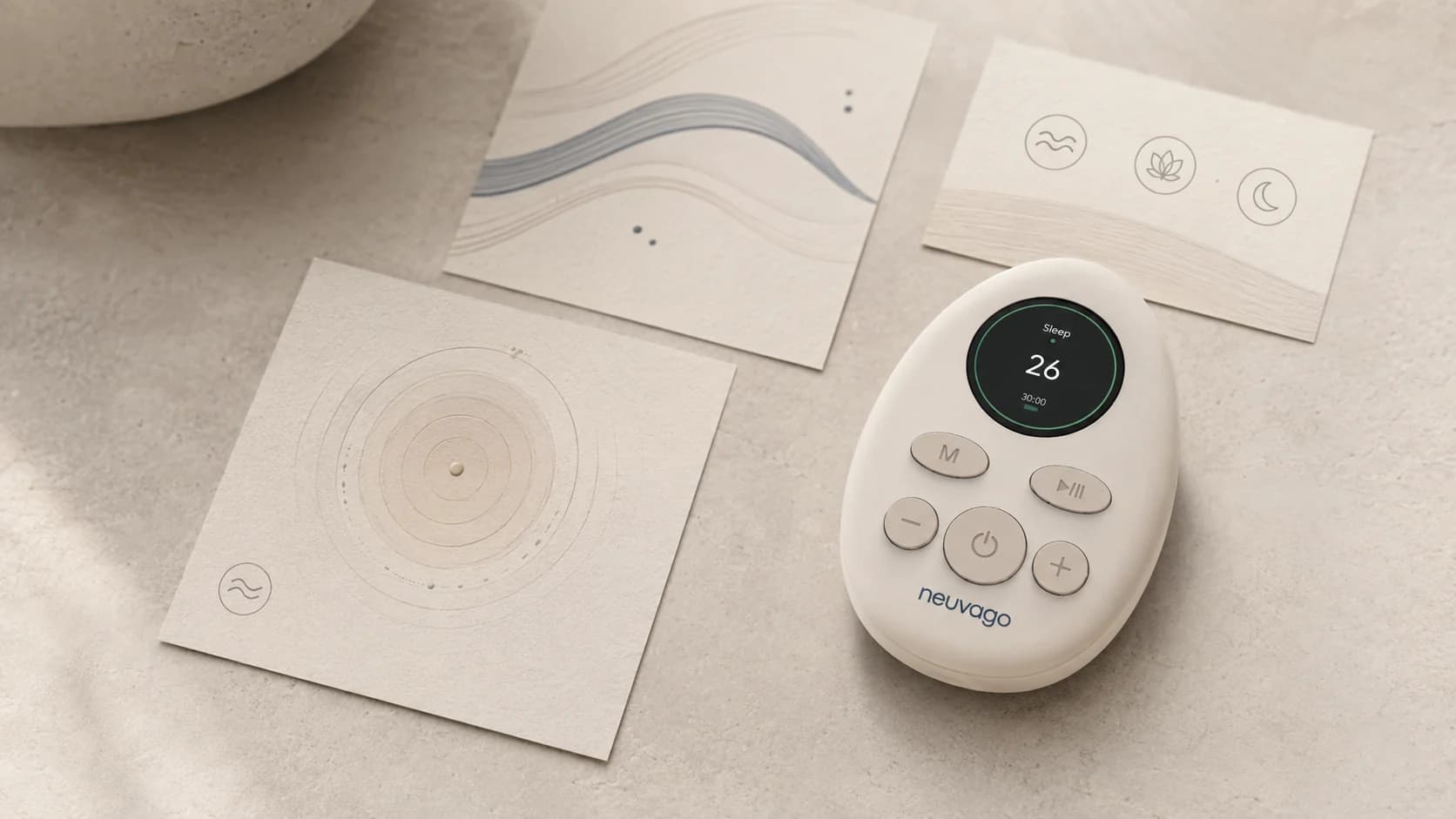
Method visual
Transcutaneous VNS is easiest to understand when device type, stimulation site, parameters, session length, and research context are kept distinct.
In plain English
Transcutaneous vagus nerve stimulation describes non-invasive stimulation through the skin. In research, that can include auricular and cervical approaches, different parameters, different control conditions, and different populations.
Auricular or taVNS studies focus on parts of the outer ear associated with vagal pathway discussions.
Intensity, pulse width, frequency, session length, and placement change how a study should be interpreted.
Explaining tVNS does not mean every non-invasive VNS product can claim every research outcome.
Research ledger
A premium research page should make the boundary visible. Evidence can inform the category without becoming an automatic product claim.
tVNS and taVNS research explores whether external stimulation can engage vagal-related pathways and measurable physiological responses.
A method label does not prove equivalence across devices, placements, settings, or wellness routines.
Neuvago should use tVNS context to explain the category while keeping product claims tied to intended use and guidance.
Simple answer
The phrase transcutaneous vagus nerve stimulation is useful because it separates external stimulation from implanted VNS. But it is still too broad to interpret without details. A neck-based protocol, an ear-based protocol, a laboratory device, and a consumer wellness product can sit in the same high-level category while raising different questions.
That is why the research layer should explain tVNS with precision: what was stimulated, how it was stimulated, who was studied, which outcomes were measured, and what the findings do not prove.
Quick answer
Transcutaneous vagus nerve stimulation uses surface electrodes rather than implanted hardware. The term can include different placements, including neck-based and ear-based approaches.
Transcutaneous auricular VNS focuses on outer-ear regions associated with auricular vagal pathways. It is often shortened to taVNS or auricular VNS.
Placement, pulse width, frequency, intensity, waveform, session length, sham design, and study population all matter when reading tVNS research.
Category map
A useful first step is to reduce acronym confusion. tVNS, taVNS, nVNS, auricular stimulation, and cervical stimulation are related, but they do not all mean the same thing.
tVNS
A broad research and device category for non-invasive stimulation delivered through the skin. It should always be interpreted by stimulation site and protocol.
taVNS
An ear-based form of tVNS that studies stimulation around external-ear regions linked to auricular vagal pathways, such as the cymba conchae or tragus in many protocols.
Neck-based
A non-invasive approach that applies stimulation near the cervical vagus nerve area. Its mechanism, device design, indications, and evidence should not be collapsed into taVNS.
Neuvago boundary
For Neuvago, tVNS research is context for understanding the category. It does not automatically become product-specific treatment, diagnosis, or prevention language.
Evidence signals
These references help frame the tVNS and taVNS research category. They are useful for education and trust, but they should not be treated as product-specific claims for every non-invasive vagus nerve stimulator.
Yap et al., 2020
A widely cited review of tVNS that focuses on stimulation sites, parameters, devices, and the need for more systematic work before translating findings too broadly.
View PubMed recordFarmer et al., 2021
An international consensus paper proposing minimum reporting items for tVNS studies, including technical device and stimulation details needed for interpretation.
View PubMed recordFrangos et al., 2015
A foundational neuroimaging study examining whether stimulation of an auricular region innervated by the auricular branch of the vagus nerve activates central vagal projections.
View PubMed recordKim et al., 2022
A systematic review and meta-analysis focused on adverse events and safety monitoring in human taVNS research.
View articleResearch checklist
Ear placement, neck placement, control placement, and electrode design change the research question. A study using one site should not be generalized to every other site.
Frequency, pulse width, intensity, waveform, duty cycle, session length, and total exposure can affect comfort, target engagement, and interpretation.
Sham and control designs matter because skin sensation, attention, expectation, and device feel can all influence subjective outcomes.
Brain imaging, HRV, symptoms, mood, sleep, pain, inflammation markers, and cognitive tasks are different endpoints and should not be mixed into one claim.
How to interpret tVNS research
tVNS research can involve different body sites, electrodes, stimulation waveforms, sham protocols, populations, and outcomes. Without those details, a reader can easily assume that every non-invasive VNS device is doing the same thing in the same way.
Neuvago’s research layer should do the opposite. It should make the method legible, keep claims attached to evidence, and help the user understand why a guided wellness product needs its own clear boundaries.
Responsible interpretation
Evidence for implanted VNS, cervical nVNS, auricular taVNS, and a wellness device may be related, but it is not interchangeable across benefits, safety, side effects, or claims.
A device may stimulate the skin, but the research question is whether the protocol engages the intended neural pathways in a meaningful and repeatable way.
Feeling tingling, pressure, or warmth does not by itself prove vagal engagement. User-facing education should avoid turning sensation into a mechanistic claim.
A positive trial in one condition, population, or device does not automatically support broad wellness claims, product equivalence, or all-day consumer use.
From research context to product understanding
Useful questions go beyond a definition: how tVNS differs from implanted VNS, whether taVNS is the same thing, what the ear has to do with the vagus nerve, and how consumer-device claims should be interpreted.
Keeping those distinctions visible makes the research easier to understand without turning category language into a product promise.
What this means for Neuvago
This research context helps separate non-invasive stimulation methods without overloading product information with technical detail.
Neuvago can explain non-invasive stimulation, app guidance, session structure, comfort, and wellness support without borrowing clinical indications or safety assumptions from other devices.
Method details should be read together with safety and tolerability, because protocol choices and adverse-event interpretation belong in the same evidence context.
The goal is not to make users memorize acronyms. It is to help them understand what tVNS, taVNS, and non-invasive VNS mean before evaluating a device.
Continue through the authority layer
Return to the broader research topic covering implanted VNS, non-invasive VNS, auricular stimulation, and brain–body regulation.
Explore VNS researchUnderstand how adverse events, side effects, study populations, contraindication awareness, and device differences shape responsible interpretation.
View safety topicGo deeper into taVNS, external-ear anatomy, cymba, cavum, tragus, electrode contact, sham design, and auricular interpretation limits.
Explore auricular topicConnect tVNS and taVNS method details to sympathetic and parasympathetic dynamics, HRV, stress physiology, and recovery context.
Explore regulation topicA plain-language guide to tVNS, taVNS, stimulation through the skin, method differences, and everyday evaluation criteria.
Read tVNS guideA plain-language guide to nVNS, tVNS, taVNS, device differences, and wellness boundaries.
Read the guideA plain-language guide to ear-based VNS, taVNS, placement language, comfort, research context, and careful claims.
Read auricular guideRead Neuvago’s summary of a foundational paper on non-invasive stimulation of the external ear and central vagal projections.
Read study summaryUse the research-literacy guide to reconstruct the device, site, parameters, comparator, outcomes and transfer limits behind a tVNS result.
Open research-literacy guideCompare reported tVNS, taVNS, cervical and implanted protocol fields side by side without treating the methods as interchangeable.
Compare tVNS protocolsPractical next steps
Move from research vocabulary into the practical device, app guidance, session structure, and everyday use experience.
See how it worksUnderstand the Neuvago device-and-app system as a wellness product with clear boundaries and guided use.
Explore NeuvagoReview what Neuvago is designed to support and what it is not intended to diagnose, treat, prevent, or cure.
Review intended useReferences
These references support transparent research context. They are not product-specific claims for Neuvago or individual medical advice.
Yap et al., Frontiers in Neuroscience, 2020
Farmer et al., Frontiers in Human Neuroscience, 2021
Frangos et al., Brain Stimulation, 2015
Kim et al., Scientific Reports, 2022
Badran et al., Journal of Visualized Experiments, 2019
Next step
Once the tVNS vocabulary is clear, the next step is understanding how safety, tolerability, intended use, and guided sessions fit together in the Neuvago system.