Method first
Start by asking where stimulation is applied, what parameters are used, and what outcome is being measured.
Learn / Transcutaneous VNS
Transcutaneous vagus nerve stimulation, often called tVNS, means stimulation delivered through the skin rather than through an implanted device. It is one of the most important terms to understand when evaluating non-invasive vagus nerve stimulation.
This guide explains what tVNS means, how it relates to taVNS and auricular VNS, why method details matter, and how Neuvago keeps the category clear without turning research language into broad medical claims.
Method layer
tVNS
Transcutaneous vagus nerve stimulation
taVNS
Ear-based branch
nVNS
Non-invasive family
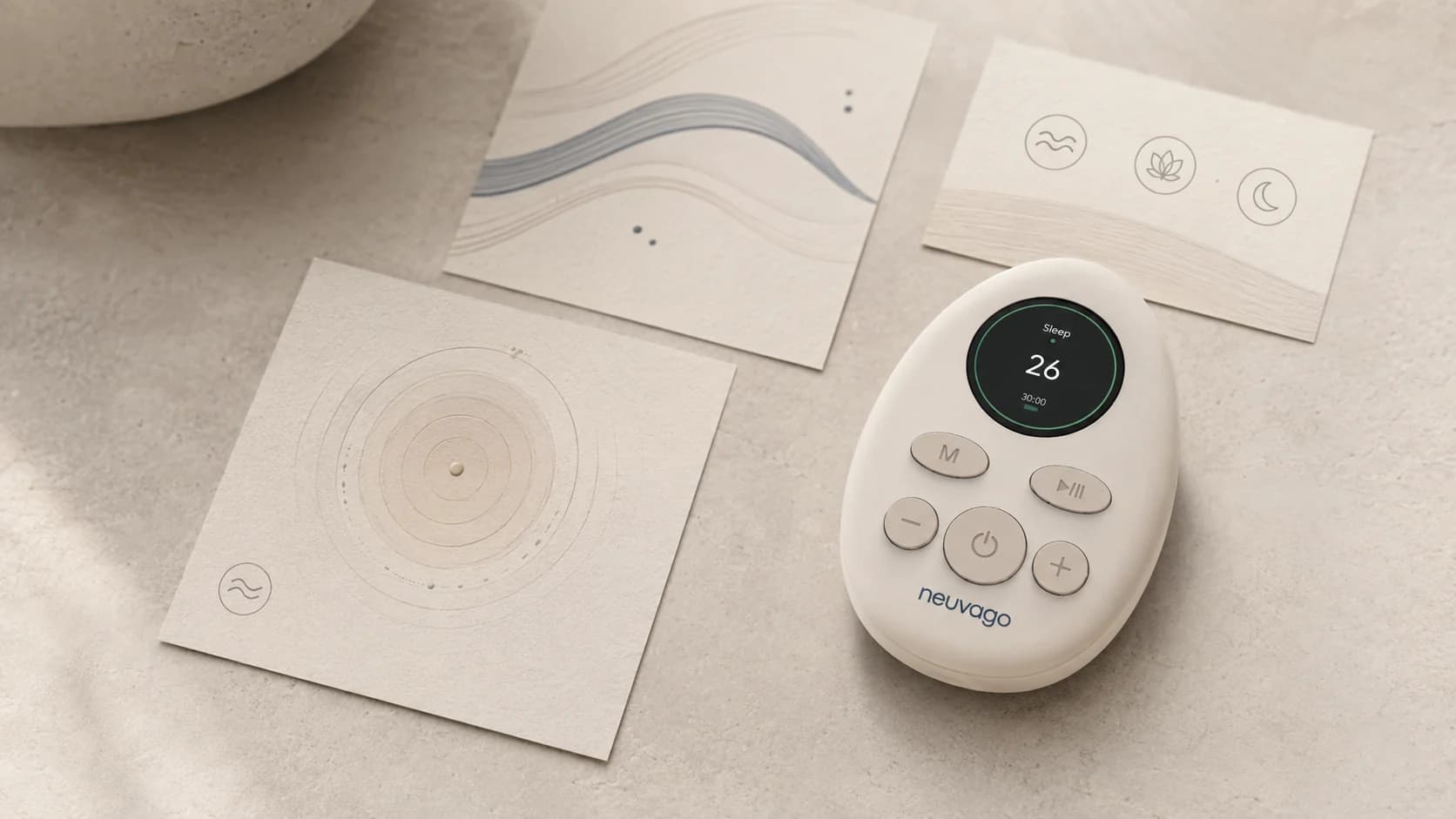
tVNS education visual
The transcutaneous VNS guide can show the method conceptually while avoiding clinical equipment, anatomy diagrams, and over-specific product claims.
In plain English
tVNS is a method term. It can include ear-based taVNS and other non-invasive approaches, but the method details still shape what a study or device experience can responsibly mean.
Start by asking where stimulation is applied, what parameters are used, and what outcome is being measured.
A consumer wellness experience should be guided, comfortable, and easy to stop or adjust within intended-use boundaries.
A protocol in a research study should not be treated as proof for every device or routine.
Simple answer
The term transcutaneous comes from trans, meaning through, and cutaneous, meaning skin. In practice, tVNS is used for external stimulation approaches that aim to engage vagus nerve-related pathways without implanted hardware.
That makes it a useful category term, but not a product claim by itself. The responsible question is always: where is stimulation applied, what protocol is used, what evidence is being referenced, and what is the intended use?
Transcutaneous vagus nerve stimulation uses external contact rather than implanted hardware. In VNS conversations, it usually refers to non-invasive stimulation applied at the ear or neck area.
The term can include auricular approaches, cervical approaches, different electrodes, different settings, and different research goals. The details matter.
Transcutaneous auricular vagus nerve stimulation, often shortened to taVNS, is the ear-based version of tVNS and is commonly discussed in relation to auricular vagal pathways.
Terms to know
These terms are often used close together. Separating them makes the category easier to understand and helps keep Neuvago’s product language precise.
Transcutaneous VNS
A broad term for vagus nerve stimulation approaches delivered through the skin using external contact rather than implanted hardware.
Auricular tVNS
The ear-based form of tVNS. It is usually discussed in relation to specific outer-ear regions and the auricular branch of the vagus nerve.
Non-invasive VNS
A wider product and research category that can include different external approaches. tVNS is one way people describe non-invasive stimulation methods.
Neck-based approach
A non-invasive approach applied near the neck area. It should not be collapsed into ear-based taVNS or treated as identical to every tVNS method.
Why it matters
tVNS is useful language only when it leads to better questions. It should help people understand device type, stimulation site, session guidance, evidence limits, and wellness boundaries.
VNS, nVNS, tVNS, taVNS, and vagus nerve stimulator are related terms, but they do not describe the same delivery route or protocol. Separating them keeps evidence interpretation precise.
A study using one stimulation site or parameter set does not automatically support every device, use case, or claim. tVNS should be read through method details.
A user should know to ask about placement, comfort, session length, guidance, stimulation settings, safety boundaries, side effects, and intended use — not just whether something says VNS.
For Neuvago, tVNS is useful method context while the product itself remains an external, ear-based wellness device. The Neuvago app is separate, optional, and not required to use the device.
Evaluation criteria
A better evaluation looks at the details that shape the experience and the evidence: where stimulation is applied, what settings are used, how sessions are guided, and what claims are made.
Auricular and cervical stimulation are different access routes. The exact ear or neck location should be reported rather than hidden behind the generic label tVNS.
Electrode geometry, contact area, montage, polarity, and how contact is maintained can change current delivery and the user experience.
Technical parameters shape what was actually delivered. Two studies called tVNS can use materially different electrical protocols.
Look for how intensity was selected: fixed, sensory-threshold based, individually titrated, or adjusted during the session. Sensation alone is not proof of target engagement.
Session length, duty cycle, sessions per day or week, treatment duration, and timing relative to tasks or outcomes all matter when comparing studies.
Sham site, blinding, participant population, follow-up window, and whether an outcome is physiological, imaging-based, subjective, or clinical determine what a result can support.
Evidence interpretation
Minimum reporting standards exist because transcutaneous VNS is methodologically diverse. Site, parameters, comparator, population, and outcome need to be visible before findings can be compared.
Consensus reporting guidance exists because site, device, waveform, intensity, duty cycle, session duration, and study design vary substantially across the literature.
Studies use different physiological, neuroimaging, behavioral, and clinical outcomes. A change in one measure should not be treated as a complete readout of vagal activity.
A control condition can differ by site, intensity, sensation, and blinding success. That affects how confidently active and control groups can be compared.
Systematic safety reviews have found that adverse-event reporting is not uniform across taVNS studies. Tolerability claims should therefore stay tied to the actual evidence and protocol.
Boundaries
Clear boundaries make the category more trustworthy. They help users understand that related research does not automatically translate into broad product promises.
Implanted clinical VNS and transcutaneous VNS are related categories, but they differ in hardware, exposure, regulation, indications, and evidence. They should not be treated as interchangeable.
Auricular VNS is a specific ear-based branch. It is useful to understand separately because placement, comfort, and research language differ from neck-based approaches.
Tingling, pressure, warmth, or comfort can be part of the user experience, but sensation alone does not prove a specific vagal mechanism or clinical outcome.
Research should be interpreted by device, site, parameter set, population, control condition, and outcome. That is especially important in broad wellness communication.
Neuvago context
Understanding the category comes before evaluating a non-invasive vagus nerve stimulator. The practical questions are placement, settings, comfort, repeatable use, and responsible wellness boundaries.
Neuvago can make tVNS understandable without turning the product page into a dense research manual, borrowing clinical indications, or making claims beyond the intended wellness use.
For everyday use, the device should make placement, comfort, session length, and intensity easy to understand. The separate Neuvago app can add optional guided tools, but it is not required to use the device.
When moving from tVNS methods to Neuvago, the practical questions are how the ear-based device works, how sessions are structured, and how the product stays within clear wellness boundaries. The app remains a separate, optional addition.
Continue learning
These pages separate the broader category, the ear-based method, product comparison, and the deeper research layer so each question stays on the right page.
Check how a product explains stimulation site, electrode contact, parameters, target evidence, safety, total ownership, and current commercial terms.
Open the buyer guideSee why auricular and cervical stimulation need different anatomy, hardware, target-engagement, and protocol questions.
Compare ear and neck VNSGo deeper into the ear-based branch of tVNS, including taVNS, auricular placement language, comfort, and responsible claims.
Read auricular VNS guideStep back to the broader non-invasive VNS category, including nVNS, tVNS, taVNS, device differences, and wellness boundaries.
Read non-invasive VNS guideUnderstand the full VNS category, including implanted systems, external approaches, research context, and clear wellness boundaries.
Read VNS overviewStart with the anatomy and regulation foundation before moving into device categories and stimulation methods.
Understand the vagus nerveResearch and trust
The Learn page gives a practical overview. The Research pages go deeper into method details, safety, autonomic regulation, and key study context.
Move from this plain-language guide into the research topic on tVNS, taVNS, stimulation sites, protocol variables, and reporting standards.
View tVNS researchUnderstand how adverse events, comfort, contraindication awareness, and device differences shape responsible interpretation of non-invasive VNS.
View safety topicConnect tVNS language to the wider physiology of sympathetic and parasympathetic state-shifting, HRV, stress, and recovery.
View regulation topicRead Neuvago’s summary of a foundational paper on non-invasive stimulation of external-ear regions and central vagal projections.
Read study summarySelected references
These sources help frame transcutaneous VNS as a research method with technical variables, reporting standards, and safety context.
Yap et al., Frontiers in Neuroscience, 2020
Farmer et al., Frontiers in Human Neuroscience, 2021
Frangos et al., Brain Stimulation, 2015
Kim et al., Scientific Reports, 2022
2024 scoping review
Next step
Once the terminology is clear, the practical question is how an ear-based non-invasive device fits into everyday life with comfort, consistency, and responsible boundaries. The separate Neuvago app can add optional guided tools without being required for device use.
Move from tVNS education into the practical device explanation: ear placement, four 20-minute modes, adjustable intensity, comfort, and clear product guidance.
See how it worksUnderstand Neuvago as a non-invasive, ear-based vagus nerve stimulator designed for simple, repeatable everyday wellness use. The app is separate and optional.
Explore NeuvagoSee how Neuvago explains wellness boundaries and what the device is not intended to diagnose, treat, cure, or replace.
Review intended use