Worry that is hard to manage
You may notice repeated worry or anticipation that takes up attention and is difficult to set aside.
CONDITIONS / ANXIETY
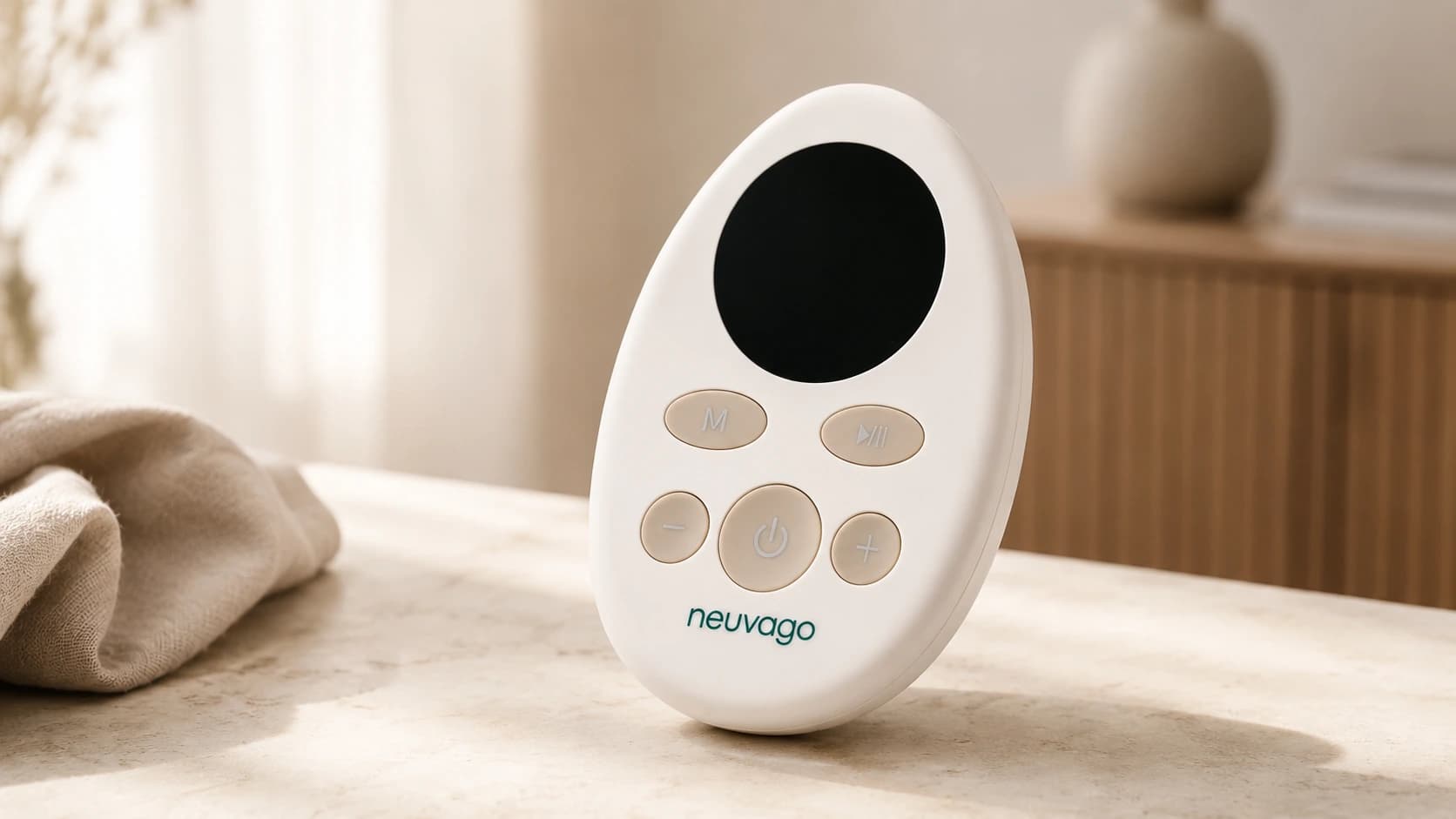
Neuvago is a non-invasive vagus nerve stimulator designed to support relaxation and everyday stress management. It delivers gentle, adjustable stimulation through an earpiece at the outer ear, with a dedicated Relax mode and a 20-minute session.
Explore how vagus nerve stimulation is being studied in relation to anxiety, alongside practical information about Neuvago and its role in everyday wellbeing.
UNDERSTANDING ANXIETY
Feeling anxious sometimes is part of life. Persistent worry, restlessness and tension can make sleep, concentration and everyday activities harder.
[2]These examples describe possible experiences, not a diagnostic checklist. Similar difficulties can occur for other reasons. Do not assume a new or concerning physical symptom is simply anxiety.
You may notice repeated worry or anticipation that takes up attention and is difficult to set aside.
Feeling tense, irritable or on edge can be part of anxiety, but does not identify its cause on its own.
Some people find it harder to fall asleep, concentrate or make decisions while feeling anxious.
Fear or worry may affect activities, relationships or work. The impact on your life is worth discussing rather than measuring against this list.
VAGUS NERVE STIMULATION RESEARCH
The vagus nerve is part of brain–body communication. Ear-based taVNS targets its auricular branch, and researchers are exploring how this may influence anxiety symptoms. The iWAVE pilot is one early clinical example.
OPEN-LABEL PILOT STUDY · 2025
An open-label pilot study included 10 adults receiving inpatient psychiatric care for both depression and anxiety. Participants received nine taVNS sessions over either one day or three days. The researchers reported lower anxiety questionnaire scores after the intervention than at baseline.
The study was small and had no sham or untreated control group, so it could not establish how much of the improvement was caused by stimulation.
Austelle et al. · Neuromodulation · 2025 [1]
Read the published studyThese studies used their own taVNS devices and protocols and did not evaluate Neuvago.
Explore wider taVNS researchNEUVAGO RELAX MODE
Neuvago delivers gentle stimulation through an earpiece at the outer ear. A 20-minute pause can make room for relaxation and everyday calm when your mind feels busy.
Choose a quiet moment to step back from daily demands and settle into a manageable wellbeing routine.
Read Intended UseASSESSMENT AND SUPPORT
If anxiety is affecting daily life or is difficult to cope with, speak with a healthcare professional about assessment and support. Effective treatments include psychological therapies such as cognitive behavioural therapy and, where appropriate, medication. The right approach depends on your needs, preferences and clinical assessment.
Everyday relaxation practices can be part of looking after your wellbeing, but they should not delay or replace appropriate care.
If you or someone else is in immediate danger or cannot stay safe, contact local emergency services now.
SOURCES
The study below concerns taVNS research. The WHO and NICE sources provide background on anxiety disorders and available care.
[1] taVNS research — open-label pilot study
DOI: 10.1016/j.neurom.2025.02.003
Read on PubMed[2] Public-health information — WHO
[3] Clinical guidance — NICE
Published 26 January 2011 · Updated 15 June 2020
Read NICE guidanceNEUVAGO
Discover gentle ear-based stimulation with Neuvago, designed to support relaxation and everyday wellbeing.
Explore Neuvago