Conditions / Stress

Stress can feel like a body that stays on too long

Stress is rarely only about feeling busy. More often, it shows up as activation, overload, poor sleep, reduced recovery, and a body that no longer feels easy to bring back down after the pressure is over. This page connects that lived pattern to nervous system education, research context, and calm daily support pathways.

Everyday stress visual

Stress support should feel like a realistic pause

The stress pathway is strongest when it points from everyday activation toward education, research context, and a repeatable guided routine.

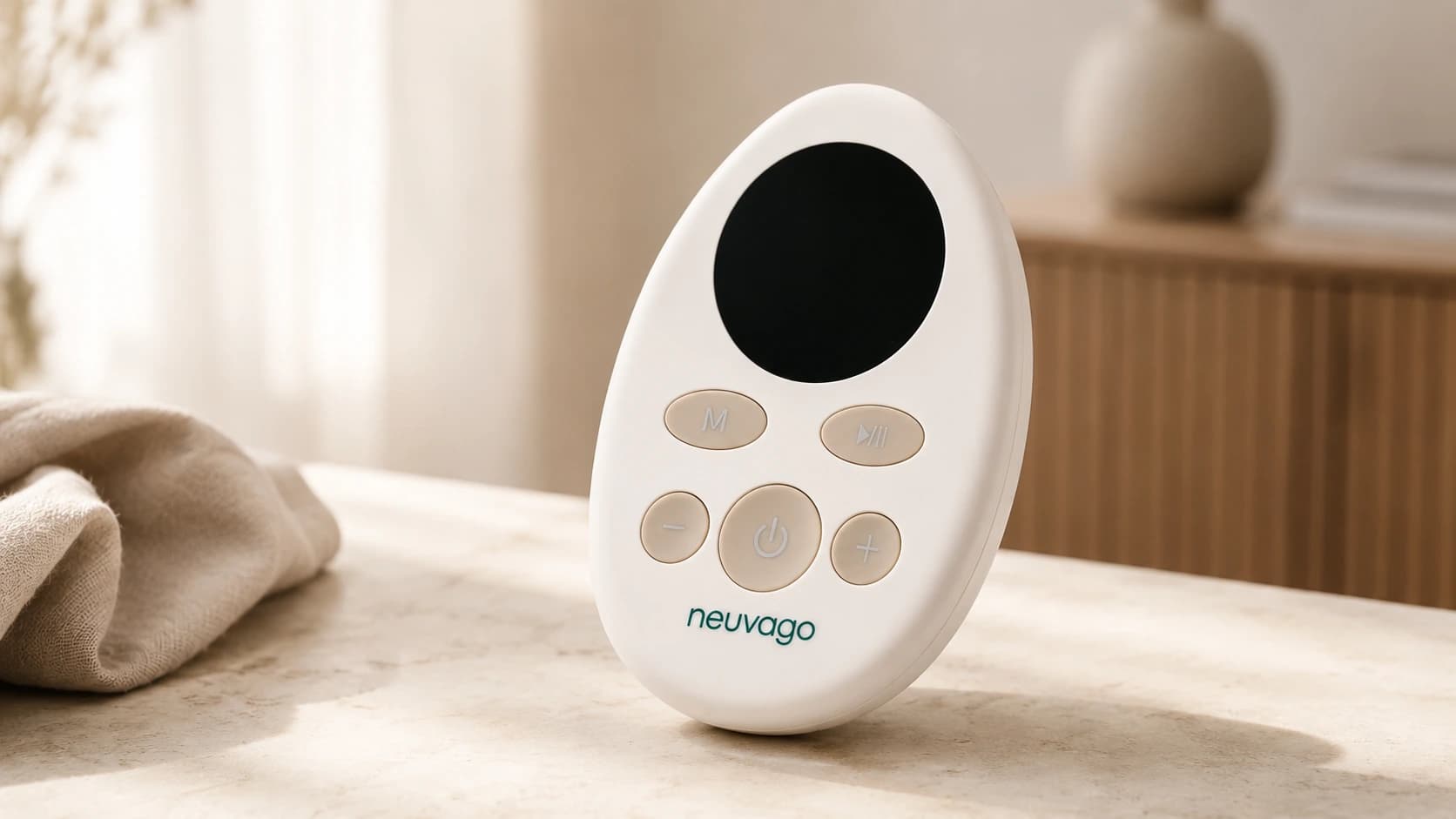
Neuvago device and guided app arranged for a calm daytime pause routine.
Neuvago device and app arranged for a calm daytime pause routine.

Stress pathway

From activation to a repeatable pause

The stress page should feel practical and human: recognize activation, understand the autonomic context, then move toward a short guided routine without making treatment claims.

Recognize activation

Name the pattern: tension, urgency, shallow recovery, or a body that stays on.

Understand stuck stress

Add research context

Use autonomic regulation and safety pages to understand the physiology and boundaries.

Research context

Build a guided routine

Move from explanation into a calm, app-guided session structure that can be repeated.

Explore the app

What stress often means in this context

Stress often makes the most sense when it is understood as a whole-system load, not only a mental state

In everyday life, stress is often more than a thought or emotion. It can become a body-wide experience shaped by tension, urgency, vigilance, thinner recovery, and the sense that the system never quite gets to leave effort mode.

That is why stress becomes much easier to understand when viewed together with sleep, nervous system state, recovery quality, and how much the body is still carrying from what has already happened.

A useful way to think about stress is not only as pressure itself, but as the relationship between pressure, activation, and whether the system has enough support to return afterward.

Key pillars

Stress is not only mental

Stress often feels emotional or cognitive, but it is also something the body carries through tension, activation, urgency, and reduced recovery.

Stress can remain in the system

Even when a stressful event ends, the body may still feel activated, alert, or difficult to settle if the overall stress load remains too high.

Recovery matters as much as pressure

Stress becomes much easier to understand when it is viewed together with sleep, restoration, and how supported the body feels over time.

Stress often becomes clearest when the whole pattern is visible

The strongest understanding usually comes from seeing stress, sleep, activation, and recovery together.

Common stress patterns

Stress often becomes most visible in the repeated patterns people live with every day

People do not always describe stress as one clear event. More often, they describe the patterns around it: feeling on edge, mentally overloaded, physically tense, or unable to recover properly.

Feeling on edge

Stress often shows up as a body that feels braced, alert, watchful, or difficult to fully relax even during quieter moments.

Mental overload

Many people notice looping thoughts, planning, scanning, worry, or the sense that the mind never fully gets to stop.

Physical tension

Stress may also feel very physical through tightness, shallow breathing, rushing, pressure in the body, or difficulty softening.

Thin recovery

A stressed system often sleeps lighter, restores less deeply, and begins the next day with less capacity than it needs.

Connected topics

Why your body feels stuck in stress

A deeper explanation of why the body may remain activated even when the obvious pressure has passed.

Explore stuck stress

How to calm your nervous system

A practical support page focused on what may help when the body feels too activated, overloaded, or hard to settle.

Explore calming

Nervous system regulation

The broader framework page for understanding how the body moves between activation, settling, recovery, and return.

Explore regulation

Recovery and regulation

A useful next step for understanding why stress becomes easier to carry when restoration and resilience improve over time.

Explore recovery

Autonomic regulation research

A research path for understanding stress through sympathetic activation, parasympathetic return, HRV, and physiological flexibility.

View regulation research

Safety and tolerability

A trust-focused research page that explains why non-invasive VNS should be interpreted by device, protocol, population, and intended use.

View safety research

How Neuvago works

A practical bridge from stress education into device placement, guided sessions, app support, and routine design.

See how it works

Stress works best as an entry point into the broader learning system

The next step is often regulation, recovery, calming, or a clearer explanation of what the body is still carrying.

Why people search for stress

Most people are not searching for a definition. They are trying to understand why stress feels so physical, so persistent, or so hard to recover from.

Stress searches are often really searches for explanation: why the body stays activated, why sleep becomes lighter, why recovery feels thinner, and why ordinary life starts to feel harder to carry.

That is why stress pages become much stronger when they connect not only to the condition itself, but to the larger frameworks that explain how the system returns, restores, and adapts over time.

Condition-to-routine pathway

A stronger stress pathway should move from lived symptoms into research, safety, and a realistic daily routine

Stress pages are most useful when they do not stop at naming the condition. A better pathway helps someone understand the body’s activation pattern, review the evidence layer, keep safety boundaries visible, and then decide whether a guided routine fits their everyday life.

Name the activation pattern

Stress support becomes clearer when the page first names what is happening: activation, overload, tension, thin recovery, or a body that stays alert.

Understand the physiology

The next step is not a claim that one tool fixes stress. It is a calmer explanation of autonomic regulation, sympathetic load, parasympathetic return, and HRV context.

Choose a repeatable routine

For Neuvago, the practical bridge is a short, app-guided routine that can be repeated consistently instead of a one-off intervention used only when stress peaks.

Keep safety boundaries visible

Because stress is health-adjacent, the page should keep clear boundaries: wellness support, not diagnosis, treatment, or a substitute for medical care.

Research the stress physiology

Move from stress symptoms into autonomic regulation, sympathetic activation, parasympathetic return, and physiological flexibility.

View autonomic research

Review safety boundaries

Understand why non-invasive VNS should still be interpreted by device type, protocol, intended use, and individual health context.

View safety research

Build a guided routine

See how the Neuvago app supports short sessions, calmer pacing, and a repeatable daily regulation rhythm without turning stress into a hard performance metric.

Explore the app

See the device and app system

Explore Neuvago as a non-invasive vagus nerve stimulator paired with an app for structured, safety-aware wellness routines.

Explore product

Responsible boundary

Neuvago is positioned as a wellness support system, not a stress disorder treatment. It can support a calm, app-guided routine, but it should not be used as a diagnosis tool, treatment promise, or replacement for medical care. People with persistent, severe, or medically concerning symptoms should seek appropriate clinical care.

Explore stress, then go deeper

Use stress as the entry point into activation, sleep, recovery, and nervous system understanding

Stress is one of the most important entry conditions in the Neuvago universe because it connects directly to activation, overload, poor sleep, thin recovery, and the broader question of how the body comes back after too much pressure.