Name the pattern
Recognize wired-but-tired, fragile rest, or the sense that the body has not fully downshifted.
Wired but tiredConditions / Sleep
Sleep is not only about tiredness. It is also about whether the body can unwind, soften, and move into a more restorative state. That is why sleep often becomes easier to understand through stress, evening activation, calming, recovery, HRV context, and repeatable wind-down routines.
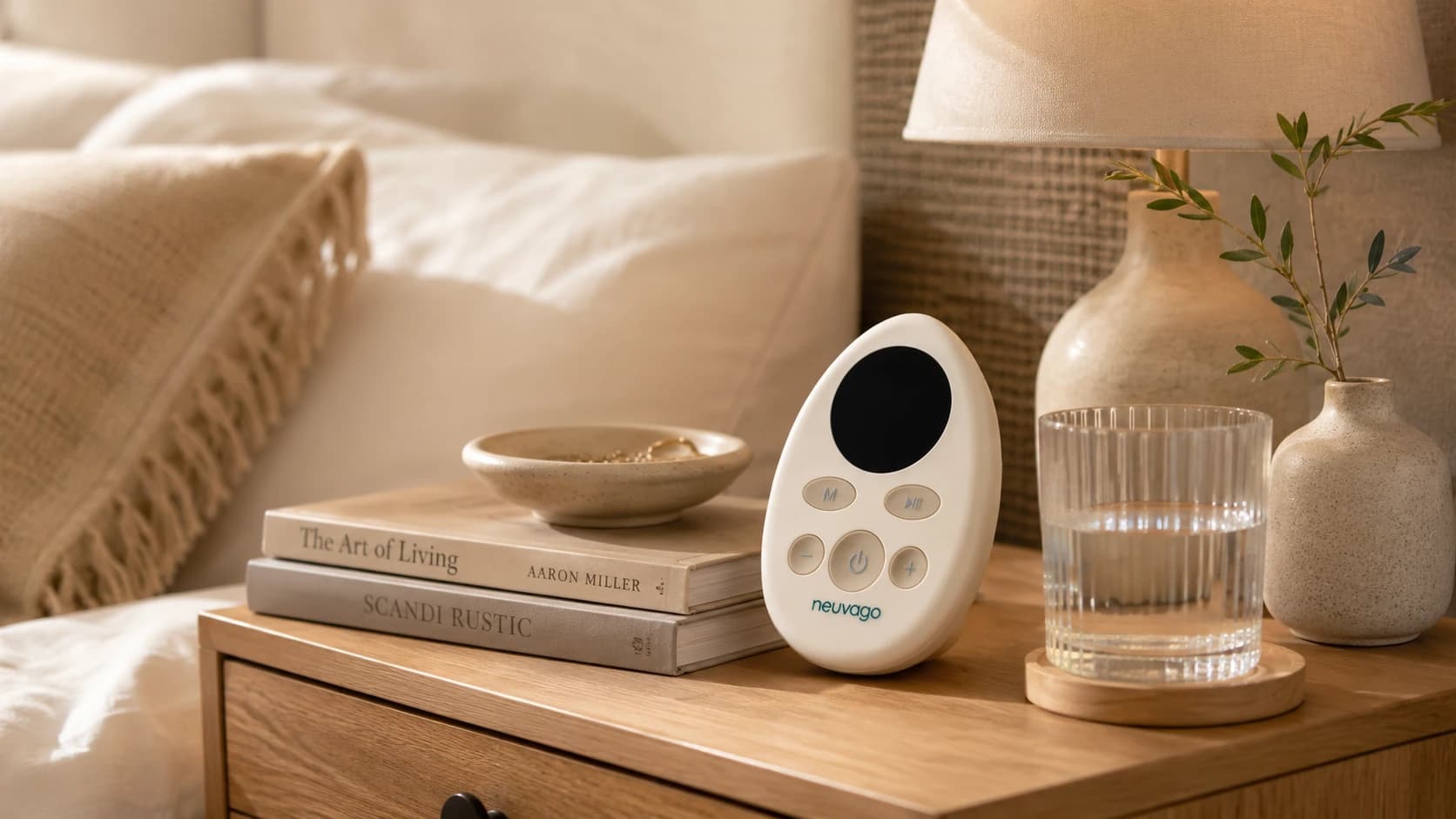
Evening wind-down visual
The sleep pathway should feel like a quiet evening routine, not a medical promise: soft guidance, repeatable rhythm, and clear wellness boundaries.


Sleep pathway
The sleep page should connect lived experience to an evening routine: understand why settling can be hard, add HRV and autonomic context, then make the next step practical.
Recognize wired-but-tired, fragile rest, or the sense that the body has not fully downshifted.
Wired but tiredUse HRV and autonomic regulation to understand recovery signals without reducing sleep to a single metric.
HRV contextLet app guidance turn evening support into a repeatable wind-down rather than a one-off intervention.
Explore app guidanceWhat sleep often means in this context
In everyday life, sleep is often shaped by whether the system can move away from activation and into a more supported state. That is why a person can be tired, yet still not fully downshifted enough for deeper rest to happen easily.
This is also why sleep becomes stronger to understand when linked to stress, evening activation, recovery, nervous system settling, and what the body is still carrying at the end of the day.
A useful way to think about sleep is not only as rest itself, but as a reflection of whether the body can actually leave effort mode and receive restoration more fully.
Key pillars
Sleep is rarely only about bedtime. It is often shaped by whether the body can move out of activation and into a softer, more restorative state.
Many people feel exhausted at night but still do not feel settled enough to rest deeply. That contradiction is an important part of the sleep picture.
Sleep becomes easier to understand when viewed together with stress load, evening activation, restoration, and how supported the system feels over time.
Sleep often becomes clearest when the whole pattern is visible
Evening activation, fragility of rest, and recovery quality often belong to the same larger picture.
Common sleep patterns
People do not always describe sleep as “nervous system related.” More often, they describe the lived experience around it: difficulty winding down, fragile sleep, wired-but-tired evenings, and harder mornings.
The body may stay mentally busy, physically activated, or subtly alert even when the day is over and rest is wanted.
Sleep can happen, but still feel thin, easily interrupted, or less restorative than it should.
A person may feel depleted and sleepy while still feeling too alert, tense, or mentally active to fully soften into rest.
When sleep is less restorative, the day may begin with low capacity, lingering stress, and the sense that the system never fully reset.
Connected topics
A closely related page for understanding why fatigue and activation can exist in the body at the same time.
Explore wired-but-tiredA practical support page for understanding what may help when evening activation makes sleep feel harder to reach.
Explore calmingA calmer-states page for understanding unwinding, restoration, digestion, and the body’s softer side.
Explore parasympathetic statesA useful next step for understanding why sleep and deeper restoration are tied to resilience, capacity, and return over time.
Explore recoveryA research path for understanding sleep through autonomic flexibility, downshifting, HRV, stress load, and recovery physiology.
View regulation researchA research topic that explains HRV as a measurement window into autonomic patterns, recovery, and physiological flexibility.
View HRV researchA practical bridge from sleep education into device placement, guided sessions, app support, and evening routine design.
See how it worksSleep works best as an entry point into the broader learning system
The next step is often calming, recovery, or a better explanation of why the body still does not fully downshift.
Why people search for sleep support
Sleep searches are often really searches for explanation: why the body feels too activated at night, why rest feels fragile, and why mornings still feel under-restored even after time in bed.
That is why sleep pages become much stronger when they connect not only to sleep itself, but to regulation, calming, evening state, and the larger question of whether the system can truly unwind.
Evening-to-routine pathway
Sleep pages are most useful when they do not stop at generic sleep hygiene. A better pathway helps someone understand the evening state of the nervous system, review HRV and autonomic research carefully, and then decide whether a guided routine fits their life.
Sleep support becomes clearer when it starts with the state of the system: evening activation, wired-but-tired fatigue, light sleep, or thin recovery.
The research bridge is not a promise that one tool improves sleep. It is a calmer way to understand downshifting, HRV context, recovery, and physiological flexibility.
For Neuvago, the practical bridge is an app-guided wind-down rhythm that can be repeated consistently rather than a complicated evening protocol.
Sleep pages should stay careful: Neuvago can support a wellness routine, but it is not positioned as a treatment for insomnia or a replacement for medical care.
Move from sleep symptoms into autonomic regulation, parasympathetic return, stress load, and physiological flexibility.
View regulation researchUse HRV as context for recovery and autonomic patterns without turning it into a simple sleep score or product guarantee.
View HRV researchExplore how the Neuvago app can support short, calm sessions that fit into an evening routine without pressure or over-tracking.
Explore the appUnderstand placement, comfort, app guidance, and how a non-invasive vagus nerve stimulator fits into daily use.
See how it worksResponsible boundary
Neuvago is positioned as a wellness support system for guided routines, not as an insomnia treatment or a replacement for clinical sleep care. It can support a calmer evening rhythm, but it should not be treated as a sleep diagnosis tool, treatment promise, or substitute for medical guidance. Persistent or severe sleep problems should be discussed with a qualified clinician.
Explore sleep, then go deeper
Sleep is one of the most important entry conditions in the Neuvago universe because it connects directly to unwinding, nervous system state, recovery quality, and whether the body can truly leave effort mode at the end of the day.