Exhaustion in relation to work
Energy may feel depleted in connection with sustained demands at work.
CONDITIONS / BURNOUT
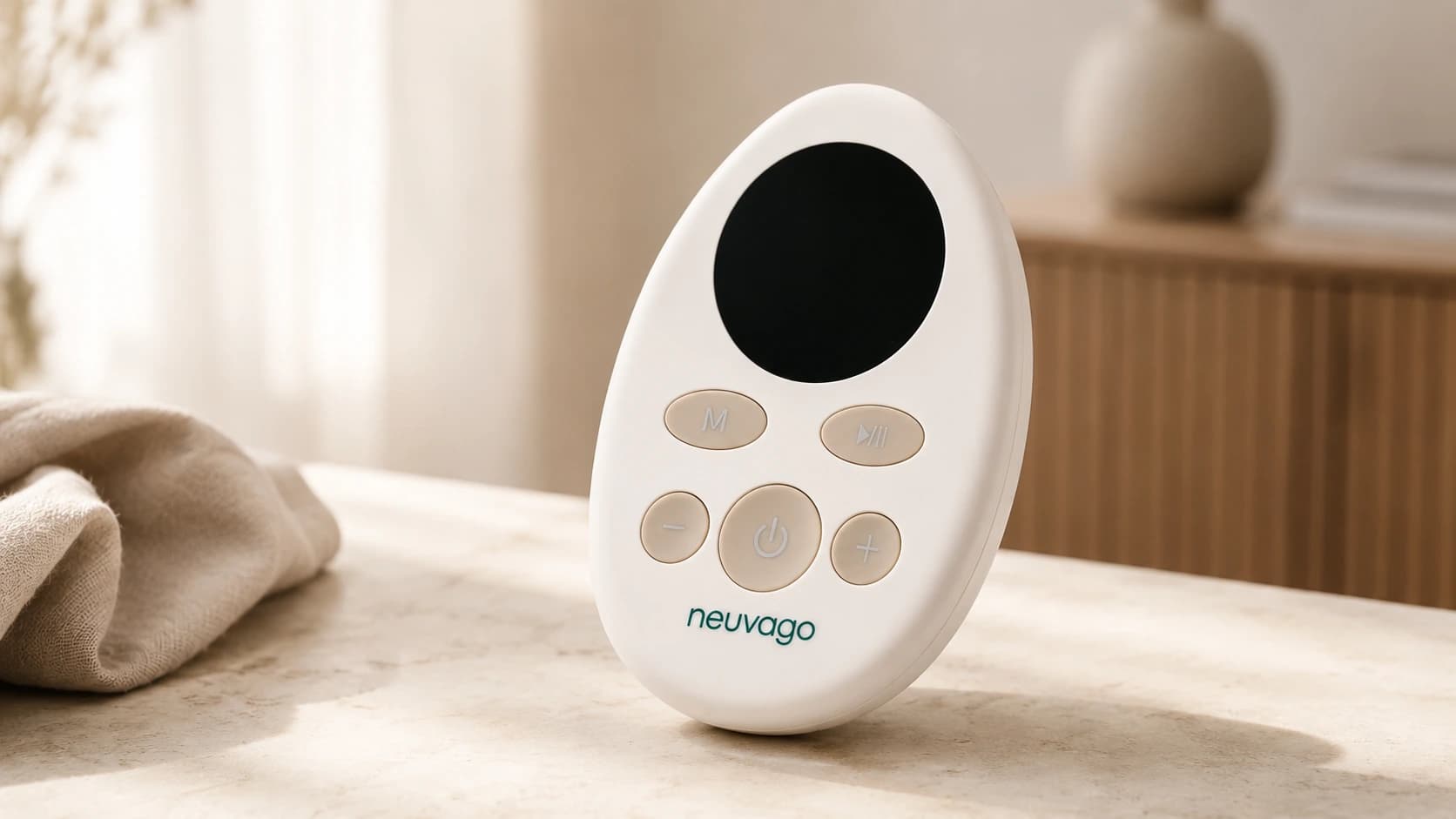
Neuvago is a non-invasive vagus nerve stimulator designed to support relaxation and everyday stress management. It delivers gentle, adjustable stimulation through an earpiece at the outer ear.
Explore work-related burnout, the importance of rest and support, and how Neuvago can fit into an everyday wellbeing routine. Learn more about the wider research on vagus nerve stimulation and stress.
UNDERSTANDING BURNOUT
The World Health Organization describes burnout as a work-related phenomenon associated with ongoing workplace stress that has not been effectively managed. Its description includes three dimensions. [1]
Energy may feel depleted in connection with sustained demands at work.
A person may feel increasingly detached from their job or negative about it.
A person may feel less effective or able to accomplish what their work requires.
In WHO’s ICD-11, burnout refers specifically to the workplace and is not classified as a medical condition. Exhaustion and distress outside work can also be serious and deserve appropriate attention. These three dimensions are not a self-diagnostic checklist.
taVNS RESEARCH
The vagus nerve participates in brain–body communication. Ear-based taVNS research explores stress responses and sleep, two areas relevant to recovery. These studies did not examine treatment of burnout.
SMALL SHAM-COMPARISON LABORATORY STUDY · 2025
Twelve healthy adults took part in taVNS and sham sessions with a mental stress test. Salivary cortisol during the test was lower with taVNS than with sham.
A small, short-term laboratory experiment; it does not establish lasting improvement in perceived stress or burnout.
Read Cuberos Paredes 2025RANDOMIZED SHAM-CONTROLLED TRIAL · 2024
In 72 adults with chronic insomnia, active taVNS produced a 4.2-point greater improvement in PSQI sleep-quality scores than sham after eight weeks.
Zhang 2024 studied chronic insomnia using its own protocol, not a Neuvago session or a burnout intervention.
Read Zhang 2024These studies used their own taVNS devices and protocols and did not evaluate Neuvago.
NEUVAGO
Neuvago delivers gentle ear-based stimulation for relaxation. A short pause can help make room for calm and unwinding in a day shaped by sustained demands.
A manageable wellbeing routine can include a 20-minute session away from work and other demands. Persistent overload may also require changes to your working conditions and individual support.
Read Intended UseSUPPORT AT WORK AND BEYOND
Support can involve practical changes to workload, working hours, control over tasks and available help. Depending on your situation, a manager, occupational health service or worker representative may help identify changes that make work more manageable.
Rest and personal routines can be part of looking after your wellbeing, but they do not remove excessive demands, bullying or other workplace risks. [3]
If you have felt tired for several weeks without a clear explanation, or tiredness affects daily life, speak with a healthcare professional. Persistent fatigue, sleep difficulties or low mood should not automatically be attributed to burnout.
If you or someone else is in immediate danger or cannot stay safe, contact local emergency services now.
Read NHS guidance on tiredness and fatigueSOURCES
These sources explain occupational burnout, its research context and approaches to workplace support.
[1] Classification · 28 May 2019
World Health Organization. WHO ICD-11 clarification.
Defines burnout in its occupational context and explains its classification in ICD-11.
Read World Health Organization[2] Burnout research · 2016
Maslach C, Leiter MP. World Psychiatry.
Reviews the burnout experience, its measurement and its relationship with work and mental health.
[3] Workplace guidance · 15 September 2026
World Health Organization. WHO fact sheet.
Describes workplace mental-health risks and approaches to organisational and individual support.
Read World Health OrganizationNEUVAGO
Explore Neuvago for relaxation and everyday calm, with a manageable pause in a demanding day.
Explore Neuvago